Activation & the devshell
Entering the checkout should just work — no manual nix develop, no
environment fiddling. Here is the machinery that makes that true.
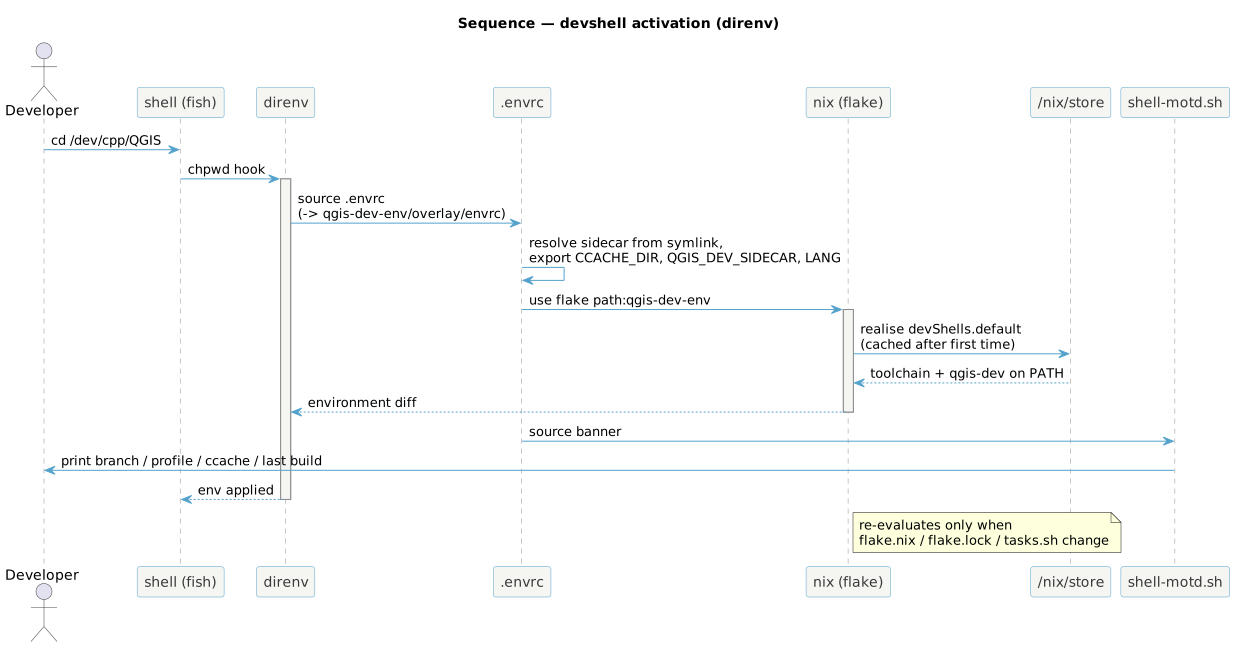
The chain
cdinto the checkout fires direnv's shell hook.- direnv sources the symlinked
.envrc(which points intoqgis-dev-env/overlay/envrc). It resolves the sidecar location from its own symlink target, so it works for any clone path and any worktree, and exportsCCACHE_DIR,QGIS_DEV_SIDECARand a UTF-8LANG. use flake path:<sidecar>realisesdevShells.default. The result is cached by nix-direnv, so only the first activation (or one after a watched file changes) does real work.- The flake's
shellHookexports the resolved Qt plugin roots, the QML import path, the PyQGIS interpreter and the report-template store path — all computed at shell time, never committed as hard-coded store paths. .envrcsourceslib/shell-motd.sh, which prints the Kartoza banner with live data (branch, profile, ccache, last build).
Why the banner lives in .envrc, not only the shellHook
nix-direnv caches the shellHook's output, so a banner emitted only from
the hook would appear once per flake change, not per entry. .envrc runs
on every activation, so the banner is sourced there (guarded by a
process-local flag so the two paths don't double-print).
What triggers a re-evaluation
.envrc watch_files flake.nix, flake.lock and lib/tasks.sh. A
change to any of those re-evaluates the devshell on your next entry
(tasks.sh because it is baked into the qgis-dev binary). Profiles,
suppressions and the banner are read live and need no reload. Because
path: flakes key on the sidecar's content hash, any sidecar commit also
prompts one quick re-evaluation — seconds when nothing material changed.