Bootstrap & isolation
What bootstrap does
bootstrap.sh <checkout> is idempotent and touches no tracked upstream
file. Every action is one of: create a relative symlink, maintain the
managed exclude block, install a hook, or write local state.
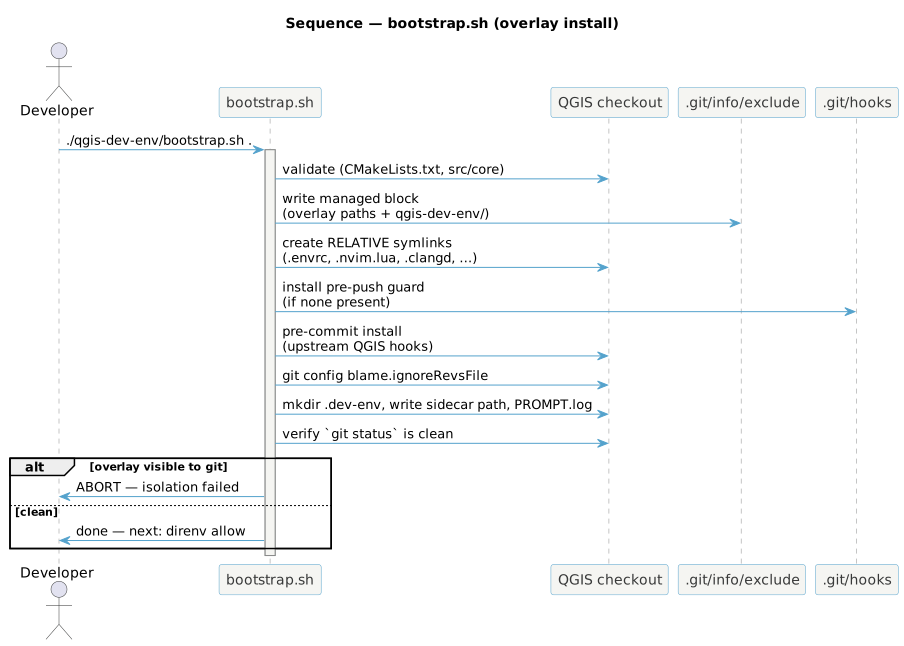
The managed exclude block is delimited by marker comments in
.git/info/exclude, so re-running bootstrap rewrites exactly that block
and never duplicates entries. --remove strips the block, unlinks the
overlay, and preserves your PROMPT.log and state under
$XDG_STATE_HOME. When the sidecar is embedded in the checkout, symlinks
are relative (so the whole tree is movable); when external, absolute.
The three isolation layers
Upstream QGIS does not accept AI contributions, and this tooling must never reach it. Three independent layers enforce that, plus one human.
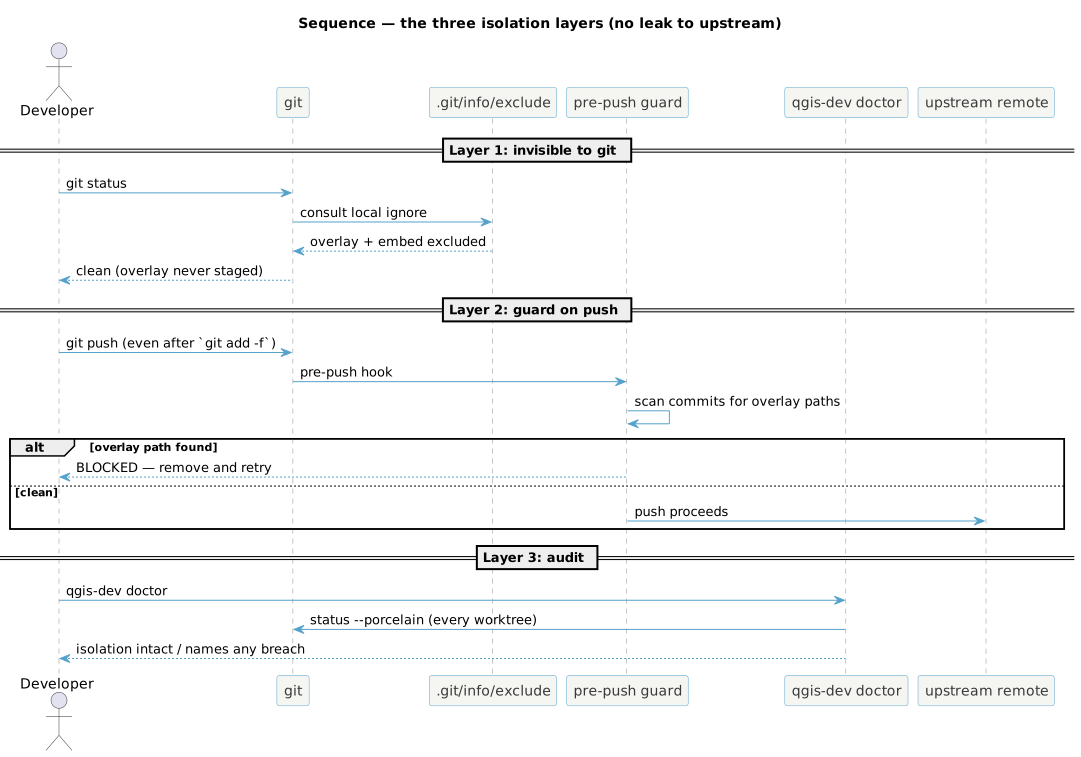
- Invisible to git. The overlay files and the embedded
qgis-dev-env/are listed in.git/info/exclude— git's local-only ignore, never committed, shared by all worktrees.git statusis clean. - Guarded on push. A
pre-pushhook scans outgoing commits for overlay paths and blocks the push if any appear — defeating even agit add -fslip. It lives in the common git dir, so it covers every worktree. - Audited on demand.
qgis-dev doctorrunsgit status --porcelainacross every registered worktree and names any breach.
The human layer: tooling keeps files apart, but only you keep authorship apart. Editor conveniences (completion, formatting) are ordinary developer tooling; generating QGIS code with an AI and submitting it is what the upstream policy forbids. See the AI policy.
The one way to break it
git clean -fdx deletes ignored files — which now includes the embed
and build/. Plain git clean -fd is safe.